


Meridian Port Services (MPS) has recently hosted a delegation of postgraduate students from the University of Ghana School of Law during an educational visit to the Tema Port. The visit forms part of the students’ academic programme in Maritime Law, Law of the Sea and Ocean Governance, aimed at enhancing their practical understanding of the sector.
In a message to the visiting students, the Chief Executive Officer of MPS, Mr. Mohamed Samara, highlighted the importance of bridging academic knowledge with real-world industry experience stating:
“It is with great pleasure and full commitment that we welcome the University of Ghana School of Law LLM students to the Port of Tema as part of their academic programme to broaden their perspective on general business law in practice.”
The visiting students were received by a team from MPS led by the Head of Legal and Compliance, Mr. Frank Ebo Brown. He delivered an insightful session that provided a comprehensive overview of the legal and regulatory framework guiding modern port operations, drawing extensively on the company’s corporate journey.
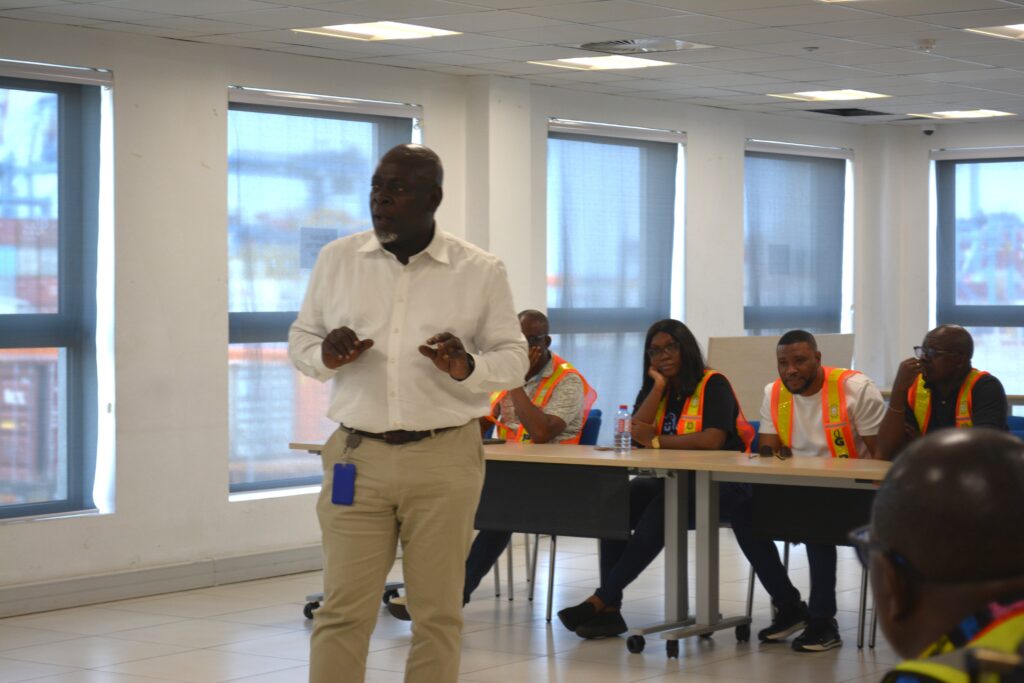
Mr. Ebo Brown emphasized that MPS operates within a broader ecosystem of collaboration involving regulators, operators, and other industry stakeholders. He noted that such partnerships are essential for sustainable growth, regulatory compliance, and continuous innovation particularly within the context of the blue economy.
“MPS is not a stand-alone organization. It thrives through collaboration with stakeholders and works in line with both national and international regulatory bodies, including the International Finance Corporation (IFC),” Mr. Brown explained.
The students were introduced to the legal and contractual framework underpinning port development and operations. Discussions covered concession agreements as the foundation for port infrastructure projects, followed by project financing arrangements and the construction phase, beginning with Front‑End Engineering Design (FEED) and other consultancy engagements, and progressing to design‑and‑build or EPC contracts supported by project management and supervision arrangements. The session also highlighted the importance of regulatory permits and approvals, as well as the tracking of permit conditions to demonstrate ongoing compliance throughout the project lifecycle. Further discussions addressed the commercial and operational landscape, including service level agreements with shipping lines and a wide range of support agreements with vendors, service providers, and day‑to‑day contractors essential to terminal operations. Together, these engagements underscored the central role of law and compliance in structuring complex port projects and ensuring safe, efficient, and sustainable maritime operations.
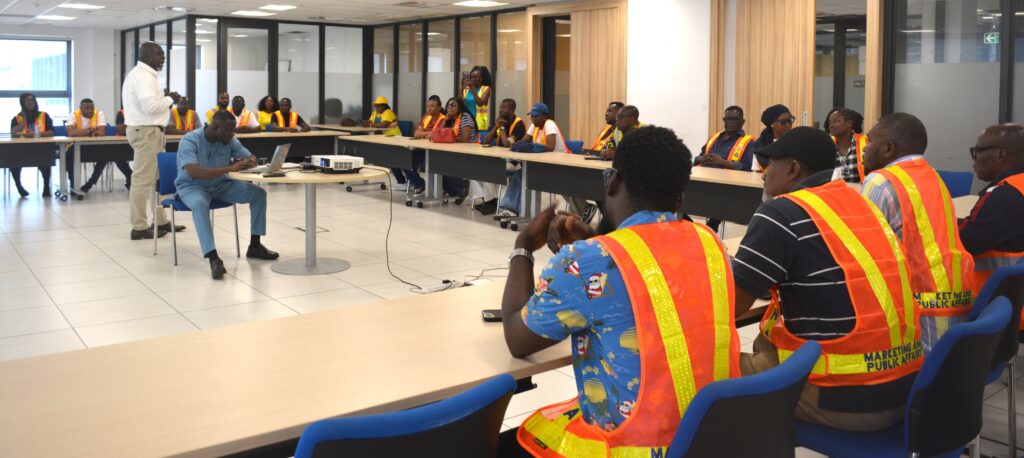
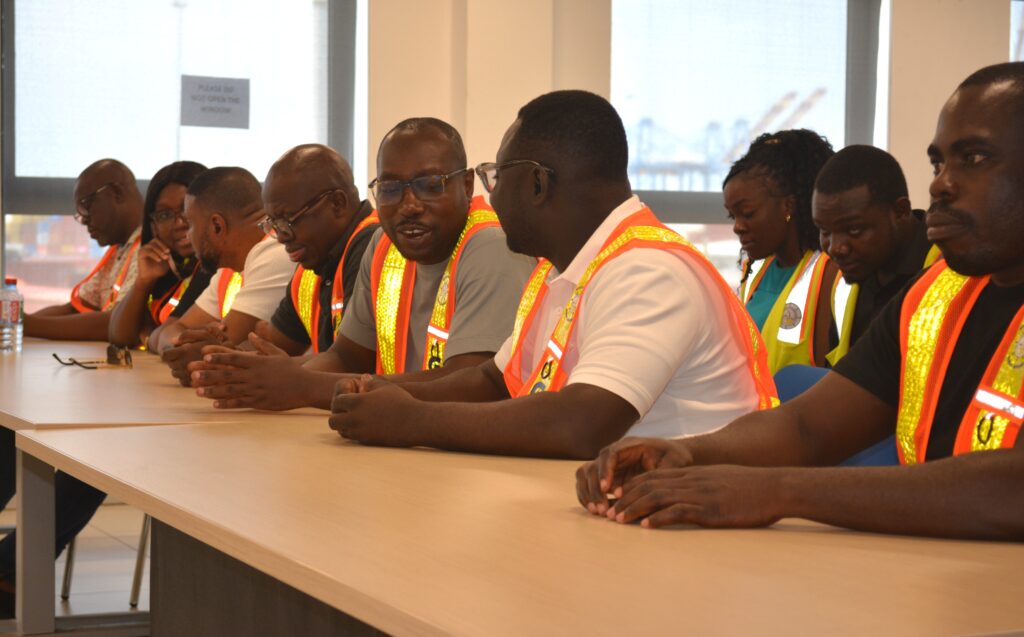
Another feature of the engagement was the focus on compliance, ethics, and governance. Discussions addressed critical issues such as anti-corruption practices, labour law compliance, environmental sustainability, and adherence to international maritime conventions. These sessions enabled students to better appreciate the role of ethical conduct in maintaining operational integrity, safeguarding national revenue, and upholding global trade standards.
Highlighting the broader significance of port operations, Mr. Brown underscored the strategic role of port infrastructure within the blue economy.
“Efficient and well-regulated port systems are essential for facilitating international trade, driving economic growth, and supporting national development”.
To complement the theoretical sessions, the students participated in a guided tour of the terminal facilities. This hands-on experience provided valuable insights into the practical application of legal principles in day-to-day port operations.
As part of its Corporate Social Initiatives, MPS consistently reaffirms its commitment to supporting education, capacity building, and knowledge transfer within Ghana’s maritime sector. The company continues to invest in initiatives that promote learning across all levels of the educational system in Ghana.
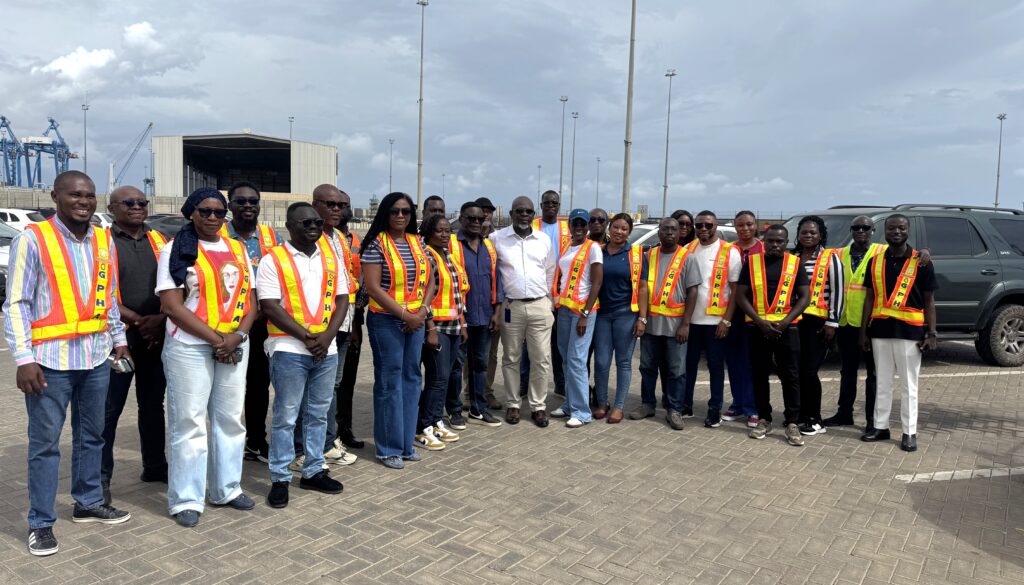
The University of Ghana School of Law expressed its appreciation to MPS for facilitating the visit and providing a valuable platform for experiential learning.
The engagement highlights the importance of collaboration between academia and industry in preparing the next generation of maritime and legal professionals for the demands of a dynamic global environment.
No Comments